
A Complete Guide to Event Planning with Catering
- Relicario Catering

- Jan 6
- 4 min read
Updated: 3 days ago
From Strategy to Seamless Execution
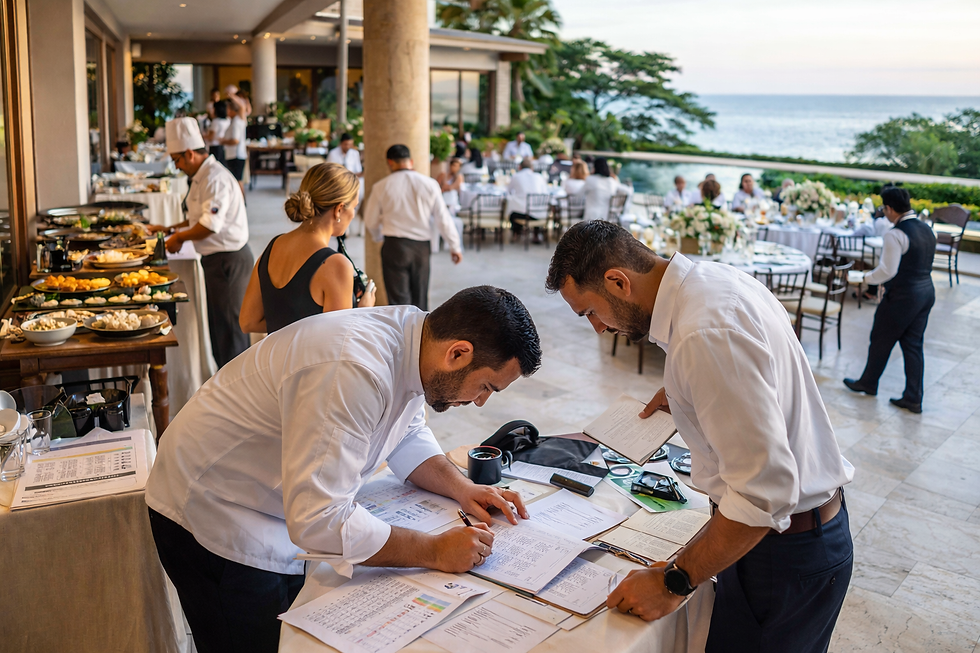
At Relicario Catering, we believe that a truly memorable event never happens by chance. It is the result of strategic planning, precise logistics, and a culinary experience designed with intention.
Understanding what catering truly involves is an important first step, as the term is often misunderstood and confused with other event-related services.
Whether you are organizing a corporate gathering, a private celebration, or a high-end gastronomic experience, having a clear process allows you to anticipate risks, optimize resources, and—most importantly—ensure that both hosts and guests can enjoy the moment without concerns.
In this guide, we share the essential elements every organizer should consider, integrating strategy, operations, and culinary experience into a single, logical flow based on our real-world event expertise.
1. Define the event’s objectives and scope.
Every successful event begins with a clear intention. Defining the purpose—whether to celebrate, inform, position a brand, strengthen relationships, or generate business—is the foundation for making consistent decisions throughout the process.
With this objective, you establish:
The type and format of the event
The attendee profile
The level of formality and the desired experience
The key indicators used to measure success
A well-defined objective serves as a compass for everyone involved: hosts, guests, suppliers, and the operational team.
2. Budgeting and Financial Planning
A professionally planned event goes far beyond food and beverages. The budget must account for all elements that shape the guest experience:
Service staff
Furniture and rentals
Logistics and transportation
Setup and breakdown times
Technology and equipment
A contingency margin for unforeseen circumstances

Clear financial planning prevents last-minute decisions and allows resources to be allocated intelligently, prioritizing what truly adds value to the guest experience.
3. Date, Venue, and Space Conditions
The choice of venue directly affects catering logistics and overall execution. Before confirming a location, it is essential to evaluate:
Capacity and layout
Access points, schedules, and loading/unloading times
Available infrastructure (kitchen, electricity, water, drainage)
Designated areas for food service and guest circulation
A properly assessed space reduces operational risks and allows the event to flow naturally.
4. Guest Management and Attendance Confirmation
Knowing the estimated number of attendees is critical for portioning, staffing, and setup. Collecting relevant information—such as allergies, dietary restrictions, or special needs—also ensures an inclusive and well-considered experience.
From experience, proper RSVP management helps prevent complex situations. During a wedding, for example, 20 additional guests arrived unexpectedly, invited by one of the attendees. This required reconfiguring tables, notifying the kitchen, adjusting service staff, and coordinating with the hosts.
Unexpected situations happen. What makes the difference is having clear protocols that allow issues to be resolved without disrupting the guest experience. At Relicario, we speak from real operational experience.
5. Designing the Culinary Experience
Catering is not just food—it is a central element of the event’s narrative. At this stage, you define:
The service format (buffet, plated service, stations, cocktail-style)
The menu, aligned with the event style and guest profile
Options for dietary needs and allergies
Beverage selection and service timing
In more refined or private settings, this approach can evolve into fully tailored private chef experiences, where every detail is designed around the space, the guests, and the intention of the gathering.

There are also strategies to manage alcohol consumption responsibly, ensuring the event remains balanced, enjoyable, and safe for all attendees.
A tasting session is essential to validate flavors, presentation, and portions, guaranteeing that the final proposal meets the host’s expectations.
6. Operational Coordination and Vendors
Clear communication with all suppliers is essential for flawless execution. It is important to define precisely:
Setup, service, and breakdown schedules
Required staffing levels
Responsibilities and points of contact
Exact service locations within the venue
Detailed coordination prevents interruptions and ensures all teams operate in sync.
7. Timeline and Final Preparation
A detailed timeline organizes every moment of the event: vendor arrivals, technical checks, service windows, breaks, and closing. At this stage, contingency plans should be reviewed for potential issues such as:
Weather changes
Technical failures
Adjustments in guest count
A final review of all elements provides clarity and peace of mind before the event day.
8. Event Execution
During the event, active supervision and constant communication between teams are key. A successful execution is reflected in:
Smooth food and beverage service
Timely attention to guests
Adherence to schedules and event flow
Proper handling of gifts or special items, when applicable
This is where all prior planning becomes a real experience—one that guests enjoy and remember.

9. Post-Event Wrap-Up and Evaluation
After the event, it is essential to coordinate cleanup, breakdown, and venue review. Gathering feedback afterward helps identify opportunities for improvement and strengthens future projects.
Post-event analysis transforms every experience into strategic learning.
Conclusion
Successful event planning with catering requires method, vision, and attention to detail. Integrating strategy, logistics, and culinary experience into a single process not only prevents mistakes—it elevates the perception of both the event and its host.
A well-planned event feels effortless. But behind that ease is rigorous preparation.
At Relicario, we design culinary experiences that integrate seamlessly into each event—crafted to be experienced, remembered, and valued.
Looking for a professional catering service for your event?
If you are planning an event and seeking a professional catering service that integrates strategy, logistics, and a personalized culinary experience, at Relicario Catering we design tailor-made proposals for each project.
From private dinners to large-scale productions, we create experiences without limits in creativity or quality.

Frequently Asked Questions About Catering for Events
What does a professional catering service include? A professional catering service integrates menu design, service staff, logistics, setup, service timing, and operational coordination to ensure a complete and seamless experience.
When should catering be booked for an event? Ideally, catering should be secured several weeks or even months in advance, especially for corporate events, weddings, or high-end private experiences.
How do you choose the right catering service for important events? It is essential to evaluate proven experience, logistical capabilities, menu customization, and real references from previous events.

Comments